We build StableDPP on blockchain, so you might expect this post to say the EU requires it. It does not, and any vendor who tells you otherwise is overselling.
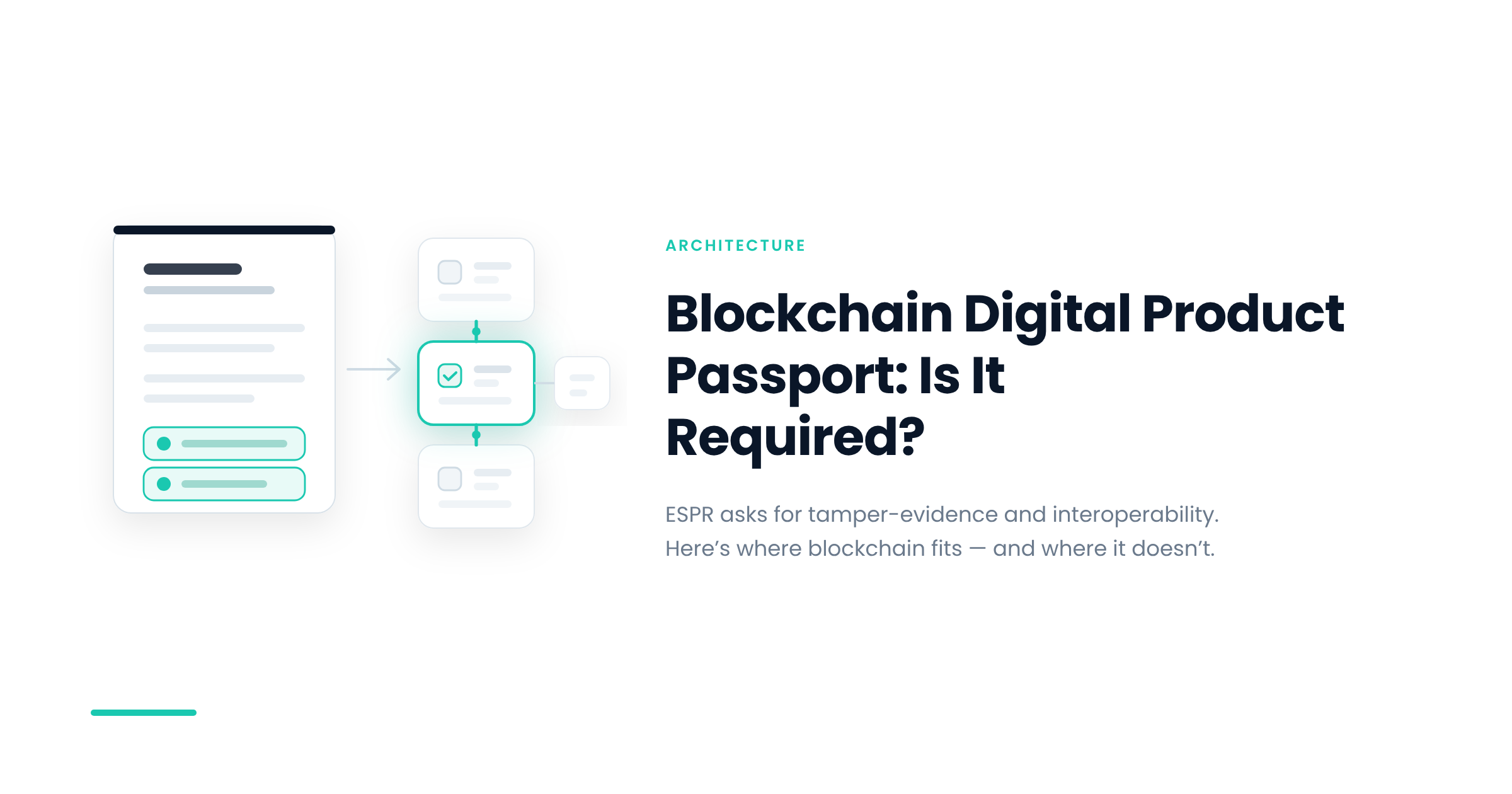
What the EU requires is passport data that is interoperable, secure and hard to alter without detection. Blockchain is one practical way to meet the last of those. This post explains where the line sits.
Does the EU Require Blockchain for a Digital Product Passport?
No. The Ecodesign for Sustainable Products Regulation sets out what a passport must do, mainly in Articles 9 to 11. It does not name any storage technology. That is deliberate: the EU wants passports from different providers, built on different systems, to work together. So a passport on a conventional database can be fully compliant. A passport on a blockchain can be non-compliant, if it ignores the standards below.
What Does ESPR Actually Require From Passport Data?
In plain terms, a compliant passport must:
- Be linked to a unique product identifier, carried on the product by a data carrier such as a QR code.
- Use open, interoperable standards, so any authorised system can read it without a proprietary tool.
- Control access by role, so consumers, repairers, recyclers and authorities see the fields meant for them.
- Keep data accurate, complete and up to date, with integrity protected against unauthorised change.
- Stay available for the period set by the product group's delegated act, including through a backup held by an independent service provider.
Notice that only the fourth point is about trust in the record itself. That is where blockchain earns its place.
What Does "Tamper-Evident" Mean for a Passport?
A tamper-evident record is one where any change after the fact can be detected. It does not stop someone editing data. It makes an edit impossible to hide. That matters because a passport passes through many hands. A mill enters fibre data. A processor adds dyeing details. A brand publishes the final record. An auditor or customs officer may check it years later. Each party needs confidence that what they see is what was entered, by whom and when.
Where Does Blockchain Help a Digital Product Passport?
- Proof that a record is unchanged. The usual design stores the passport data off-chain in a standard format, and writes a cryptographic fingerprint of each version to a blockchain. Anyone can recompute the fingerprint and compare — if one character has changed, the fingerprints will not match.
- A shared record with no single owner. In a textile chain, no single company should be able to rewrite everyone else's contributions. A blockchain ledger gives each party a timestamped entry that none of the others can quietly alter, including the software vendor.
- Verifiable history over time. Passports outlive transactions. Repairs, resale and recycling add events for years. An append-only ledger keeps that history in order.
Where Does Blockchain Not Help?
It does not make data true. If a supplier enters the wrong fibre content, blockchain will faithfully protect the wrong answer. Verification still depends on certificates, test reports and audits. It is not an interoperability standard — readability across systems comes from open identifiers and data formats, such as GS1 Digital Link and the European DPP standards, not from the ledger. And it is the wrong place for bulk or personal data: storing full passports or any personal data on a public chain creates cost and GDPR problems. Fingerprints on-chain, data off-chain is the sensible pattern.
How Should You Evaluate a Blockchain-Based DPP Platform?
Ask the vendor five questions:
- What exactly is written to the blockchain: full data, or fingerprints only?
- Can a third party verify a record without using your software?
- Is the passport data itself stored in an open, exportable format?
- How do you meet ESPR's backup and availability expectations if your company or your chain changes?
- Do you describe blockchain as legally required? The correct answer is no.
Our software buyer's checklist puts these alongside the other questions worth asking.
How Does StableDPP Use Blockchain?
StableDPP is blockchain-native: every passport version is anchored so its integrity can be checked independently. The passport data follows open identifier and data standards, so it stays interoperable with EU systems and portable if you ever leave. We treat blockchain as the answer to ESPR's integrity requirement, not as the compliance requirement itself. You can see how this works on our product page, or create a sample passport for one of your own products.
Book a demo — see how StableDPP anchors passport integrity →