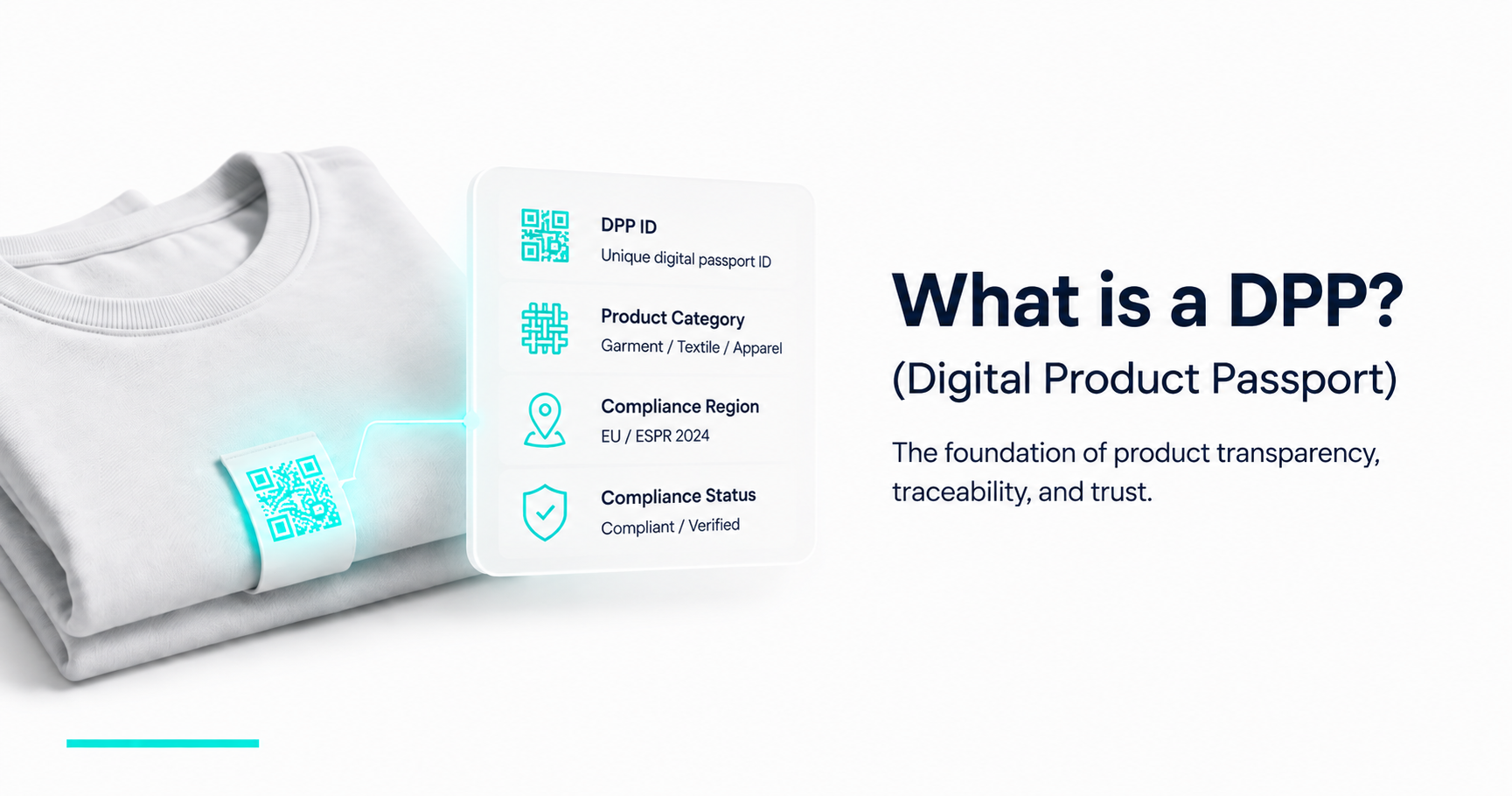
The EU Digital Product Passport Registry went live on 19–20 July 2026, and Implementing Regulation (EU) 2026/1778 took effect on 6 August. Almost no exporter-facing content explains what a registry actually is in this system: a lookup layer holding identifiers and pointers, not a warehouse holding your product data. That misunderstanding produces two opposite, equally wrong reactions — panic that confidential mill data is now sitting on an EU server, and complacency that registration is someone else’s problem. Both are off. The exporter’s actual position in the chain is this: the economic operator placing the product on the EU market carries the registration obligation, which for most Indian exporters means the buyer — and that’s precisely why buyer data requests have sharpened since July.
Two Things Changed in the Same Week of July
Most exporters felt only one of them. The registry quietly went live as infrastructure. At the same time, the Article 25 destruction ban began applying to large fashion undertakings from 19 July 2026 — extending to medium-sized companies from 19 July 2030 — and that’s the change suppliers are actually feeling, as buyers suddenly ask sharper questions about over-production and unsold stock. If a buyer’s questionnaire changed tone this summer, this is why.
What a Registry Is, and What It Is Not
Kill the “server in Brussels” myth first: the registry holds identifiers and pointers to where a Digital Product Passport record actually lives — not your material composition, your mill pricing, or your supplier list. Your product data stays wherever it’s hosted, under whatever access controls that platform enforces. The registry’s job is resolution — given an identifier, point to the right record — the same role a GS1 Digital Link resolver plays at the product level.
Who Actually Carries the Obligation
The obligation attaches to the economic operator placing the product on the EU market — in practice, whoever imports or sells it there. When you ship FOB to a European brand, that’s the brand, not you. The regulation does not create a direct ESPR obligation for a supplier shipping into a buyer who then places the product on the market — say this precisely, because it’s easy to overstate in either direction.
Why the Obligation Sits With the Buyer but the Work Lands on You
Obligations don’t travel upstream on their own — contracts do. A buyer managing its own ESPR exposure flows the data requirement down through sourcing agreements, which is why the annexe clauses showing up in AW26/SS27 contracts are new even though the underlying regulation isn’t. Reading those clauses as “the buyer’s compliance risk, contractually assigned to you” is more accurate than reading them as your own direct legal exposure.
Reading the Data Request You Just Received
Sort incoming fields into three buckets before responding to anything:
- Genuinely regulatory: fields that map to ESPR Articles 10/11 or the eventual textile delegated act.
- The buyer’s own ESG programme: fields a brand wants for its own sustainability reporting, beyond what regulation requires.
- A fishing expedition: fields that probe your sourcing or costing structure under cover of compliance.
Most questionnaires mix all three without labelling which is which — sorting them is the first useful thing to do with one.
Negotiating From a Position of Readiness
This is a short note, not legal counsel: treat an unclear clause as a question to ask the buyer, not a clause to reject outright. The suppliers who can answer a data request cleanly and on time are the ones who keep the order when a buyer is consolidating its vendor base around who can prove readiness. That’s a pricing-of-readiness argument, not an absorb-the-cost-silently one — see how Digital Product Passport cost actually breaks down before agreeing to carry it for free.