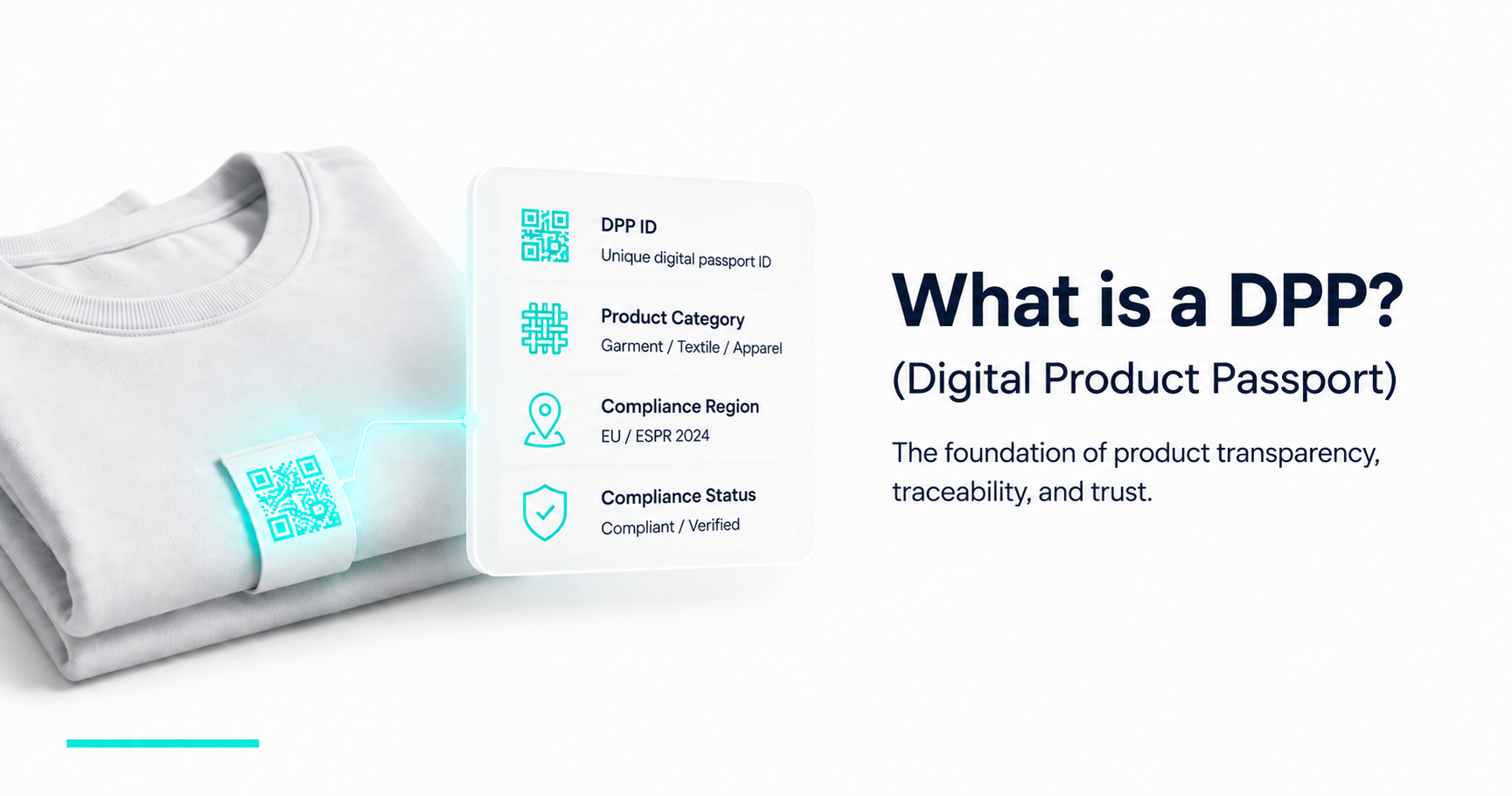
A Digital Product Passport (DPP) is a structured digital record that travels with a physical product and tells the full story of what it is, where it came from, and what it is made of. Accessed by scanning a QR code or data carrier on the product, a DPP holds verified information about materials, origin, manufacturing, sustainability, and end-of-life options. Under the EU’s ESPR regulation, DPPs are becoming mandatory for products sold in the European Union.
What Does a Digital Product Passport Actually Contain?
Think of a DPP as an identity document for a product. The precise fields will be set category by category through ESPR’s delegated acts, but the shape of the record is already clear:
- Identity: a unique product identifier, the model or style, and the manufacturer or brand behind it.
- Materials: composition by percentage, including recycled content and any substances of concern.
- Origin and supply chain: where the product and its components were made, and by whom.
- Certifications: third-party schemes such as GOTS, OEKO-TEX or GRS, attached as evidence rather than displayed as a logo.
- Sustainability data: carbon footprint, water or chemical use, and durability or repairability indicators.
- Care and lifecycle: how to use, maintain and repair the product — and how to recycle or dispose of it at end of life.
How Does a Digital Product Passport Work?
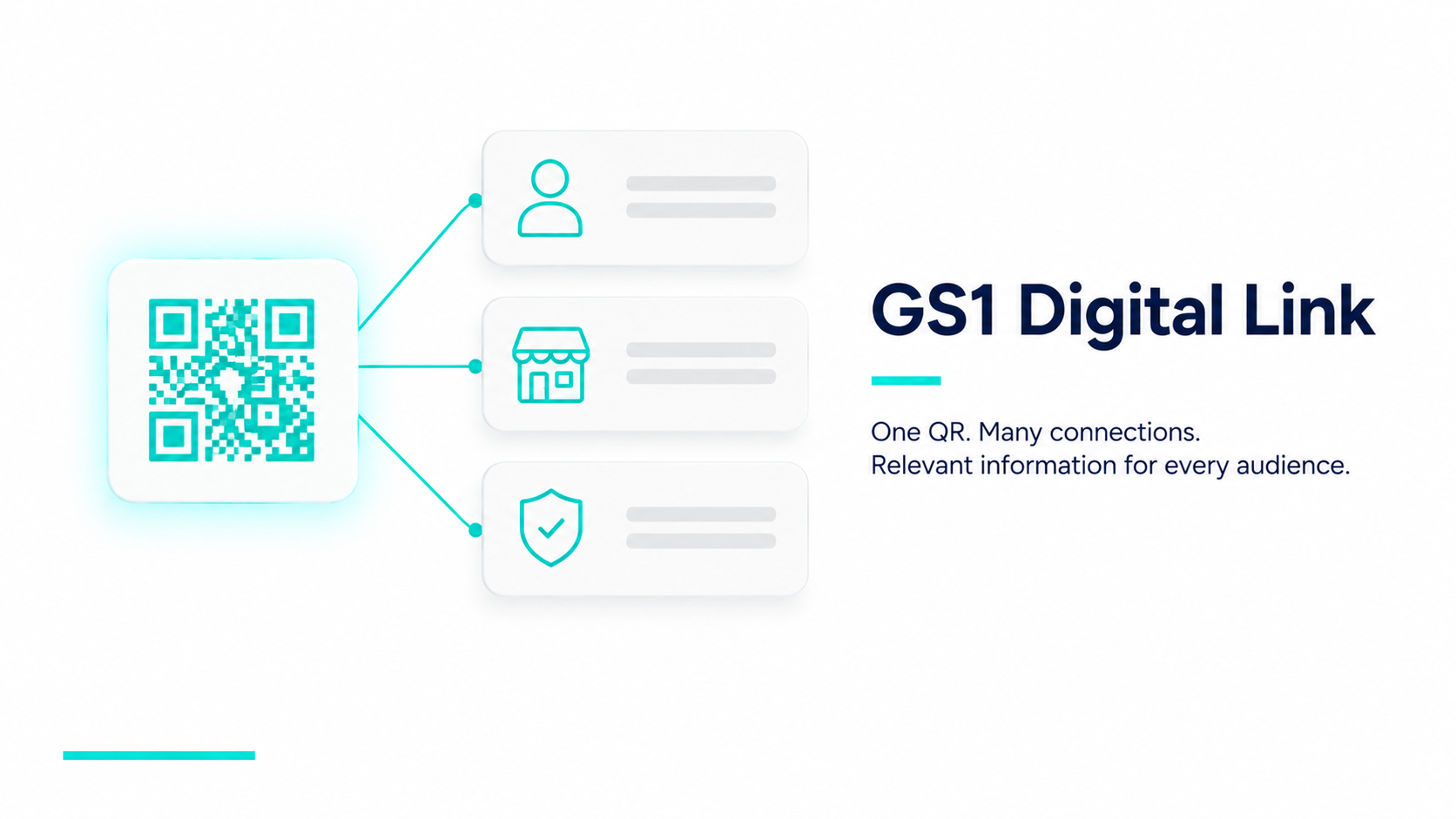
A physical data carrier on the product — usually a QR code on a care label, hang tag or packaging — links to the passport record. Scanning it resolves to that specific product’s passport page, which is served from the platform holding the data. The link is built on an open standard, typically GS1 Digital Link, so the same code can be read by a consumer’s phone, a retailer’s inventory system, a customs authority, and a recycler — each getting what is relevant to them from one physical code.
Who Needs a Digital Product Passport?
Anyone placing a covered product on the EU market. That obligation attaches to market placement, not to company nationality — so an Indian, Bangladeshi or Turkish manufacturer exporting into the EU is in scope even though the regulation is European. In fashion and textiles the chain runs from fibre and fabric suppliers, through cut-and-sew manufacturers, to the brand and the retailer that sells the finished garment. In practice the brand carries the compliance obligation, but it can only meet it with data its suppliers provide, which is why fashion brands and their manufacturers are being pulled into passport readiness well ahead of the deadline.
Why Is the EU Making Digital Product Passports Mandatory?
Two reasons, and both matter for how the passport is designed. The first is circularity: a recycler can only process a garment correctly if it knows what the garment is made of, and a resale platform can only price it if provenance can be verified. The second is anti-greenwashing: sustainability claims in fashion have historically been asserted rather than evidenced, and the passport converts a marketing statement into a checkable record. The regulation is, in effect, moving the burden from claim to proof.
What Makes a Digital Product Passport Trustworthy?
Verification, not presentation. A passport whose contents can be silently edited after publication is weak evidence — it tells you what the record says today, not what it said when a buyer relied on it. Tamper-evident records solve that: once anchored, an entry cannot be quietly rewritten, and any change is attributable and visible. This matters most for the passports that live longest, since a garment’s record can be updated by a brand, a repairer, a reseller and a recycler over several years. A lifecycle record that anyone can rewrite is not a lifecycle record.
How Do You Create a Digital Product Passport?
At a high level: identify which products need passports, gather the material, origin and certification data, structure it against the required fields, publish it on a DPP platform, and attach it to the product with a compliant QR code. Most brands start with a single product line rather than an entire catalogue — it surfaces exactly which data is easy to get and which supplier relationships need work, before any large commitment is made. The step-by-step version of this process is covered in its own guide.