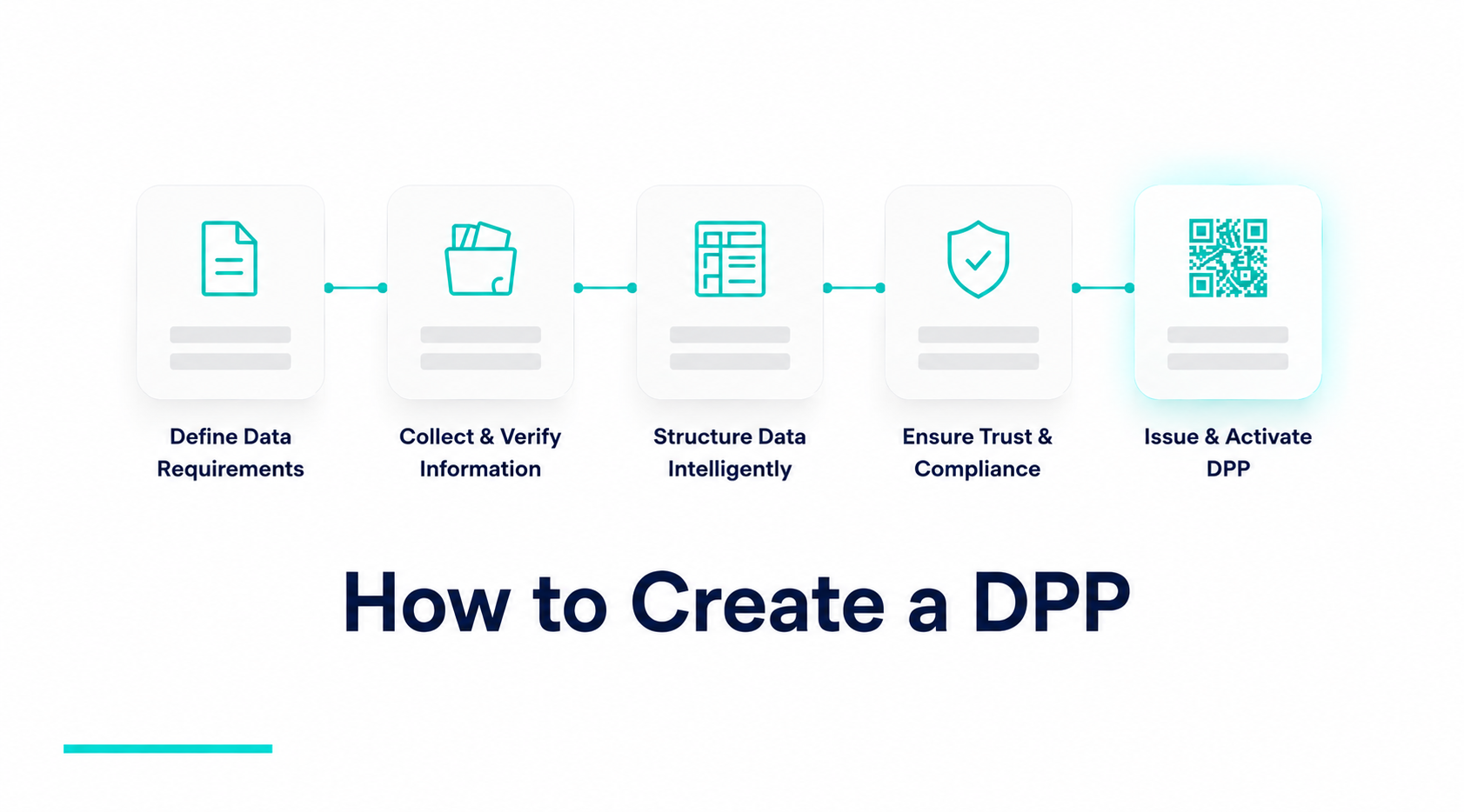
Creating a Digital Product Passport takes five steps: identify which products need passports, gather the required data from your supply chain, structure that data against the DPP data fields, verify and publish it on a DPP platform, and attach the passport to the product with a GS1 Digital Link QR code. With a self-serve platform, a first passport can be live in minutes once the data is ready.
Before You Start: What You’ll Need
- A list of the products (or product lines) that will need passports, prioritised by EU exposure.
- Your existing product documentation: composition sheets, supplier details, certifications, and test reports.
- A DPP platform account — this is what structures, verifies, hosts, and serves your passports.
Step 1: Identify Which Products Need a Passport
Start with scope, not software. If you sell into the EU, ESPR requirements will phase in by product category from 2027 — textiles among the first. Prioritise the products with the greatest EU exposure: your best-selling EU lines, products your EU buyers are already asking traceability questions about, and any new collections heading to European retailers. You do not need to passport your entire catalogue on day one; you need your EU-facing products covered first.
Step 2: Gather the Product Data
This is the step that takes real time — which is exactly why starting early matters. For each product you need material composition by percentage, origin and manufacturing details, certifications with their evidence, and any sustainability metrics you intend to publish. Some of this sits in your own systems; some of it has to come from suppliers. Expect the exercise to reveal two things quickly: which suppliers can already produce structured data on request, and which relationships still run on a phone call and a scanned certificate. That gap is the real project, and it is better discovered in 2026 than in 2027.
Step 3: Structure the Data Against the DPP Fields
Raw supplier data is rarely in the shape a passport needs. Structuring means mapping what you have onto the required fields — composition, origin, certification, care, end-of-life — and identifying what is missing. A purpose-built platform does most of this for you, guiding you field by field, validating entries against ESPR’s expectations, and flagging gaps rather than letting an incomplete passport go live. On a component-aware platform you can also structure the record by component, so fabric, dye, hardware and lining each carry their own traceable data. That is what makes a passport genuinely detailed rather than superficial.
Step 4: Verify and Publish the Passport
Publishing is where a passport becomes evidence rather than a data entry. On a blockchain-anchored platform, the record is written so that any later change is visible and attributable — which is what allows a buyer or auditor to rely on it months later. Once published, the passport gets its own page, hosted and served by the platform, with the public and restricted fields separated so commercially sensitive supply-chain data is not exposed to every consumer who scans the code.
Step 5: Attach the Passport to the Product
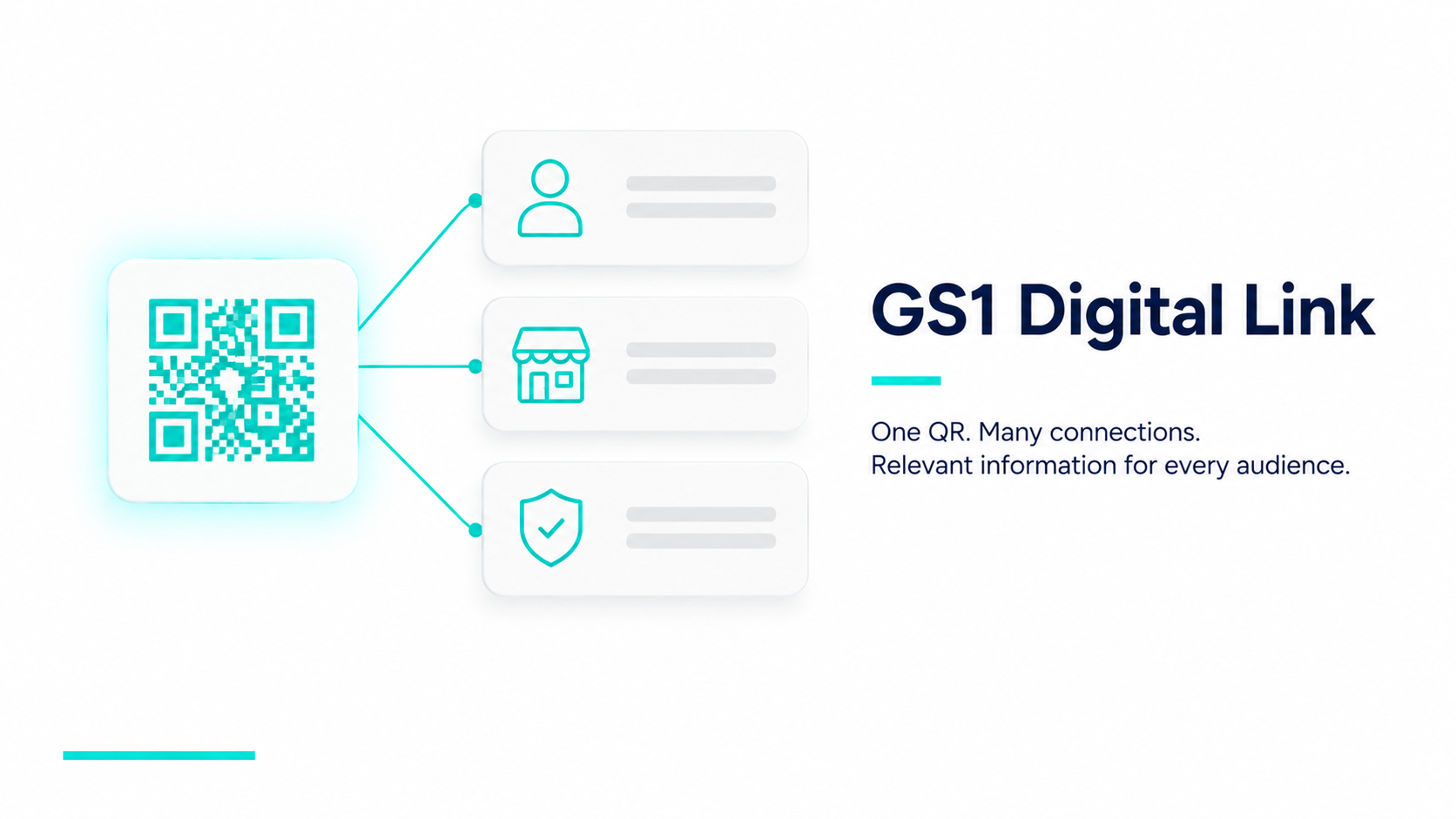
The final step is physical. The passport needs a data carrier on the product — usually a QR code on a care label, hang tag, or packaging — built on the GS1 Digital Link standard so the code resolves to that specific product’s passport page and can be read by systems that have never seen your brand before. The platform generates the compliant code; your job is to get it onto the product at production speed, which is a labelling and print decision worth making early rather than at the last minute.
Create your first passport free →
Want to understand pricing before you scale? See how much a Digital Product Passport costs.
How Long Does It Take to Create Your First Passport?
Once the data is in hand, minutes. The honest answer to the whole question, though, is that the platform work is not the slow part — supplier data collection is. Brands that run a pilot on one product line first consistently move faster on the full rollout, because the pilot tells them exactly which data is easy, which is missing, and who inside the business owns getting it.